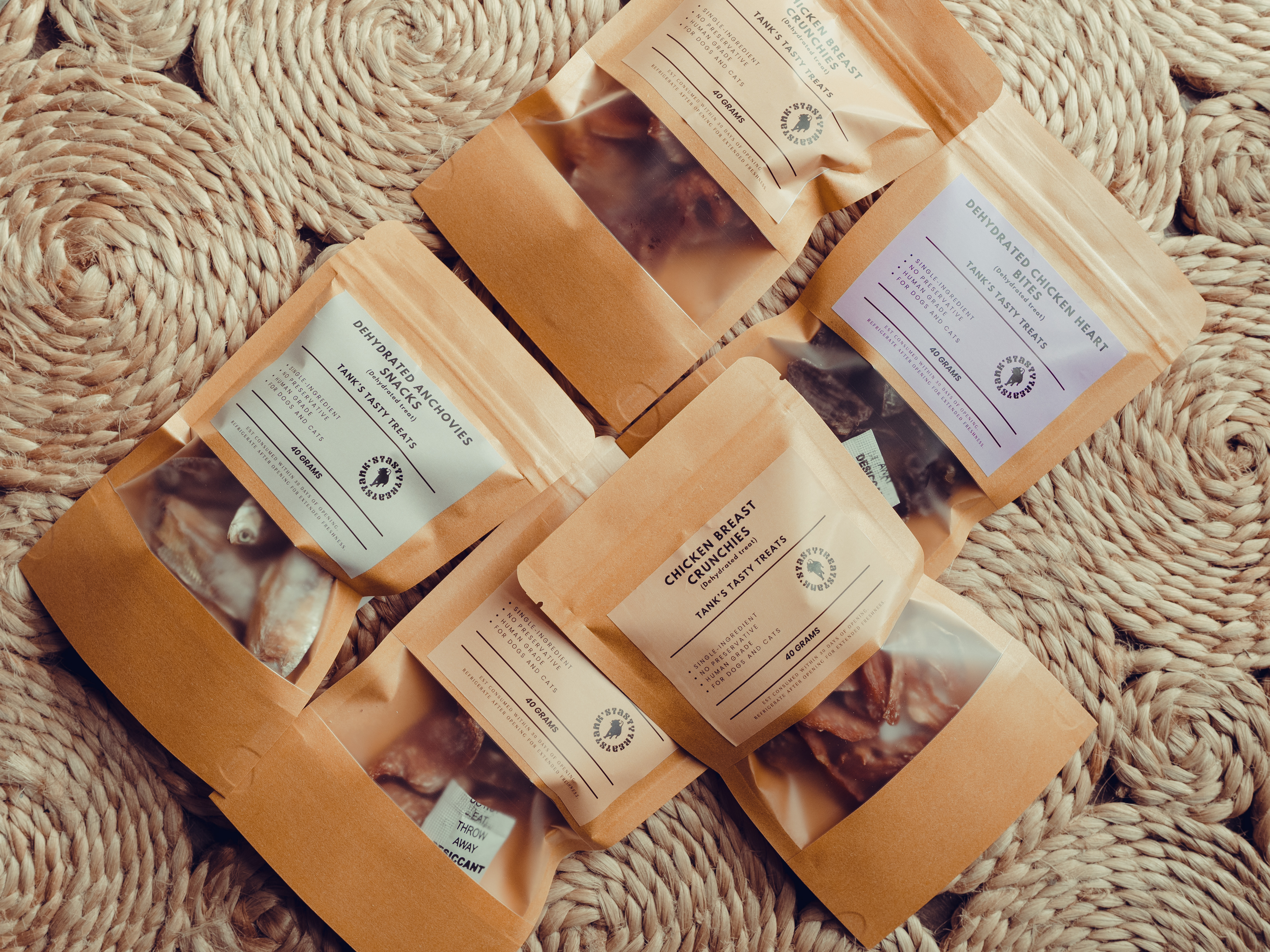
Chicken is usually the first thing people reach for when trying single-ingredient treats, and it makes sense — it's familiar, widely available, and most dogs take to it easily. But chicken is also one of the more common proteins dogs develop sensitivities to over time, largely because it shows up in almost every commercial kibble and treat on the market. If a dog is going to react to something, there's a decent chance it's already the protein they've eaten the most of.
If you're introducing single-ingredient treats to a dog with a sensitive stomach, or one who's never had them before, we usually recommend starting somewhere less common instead. Fish, like sardines, is a good first option — it's easier to digest for a lot of dogs, and reactions to it are comparatively rare simply because it hasn't been in their diet as heavily.
Organ meats like liver are another solid starting point. Liver is nutrient-dense and most dogs find it highly palatable, though it's rich enough that portion size matters more here than with other cuts. We treat liver as a training-treat-sized reward rather than a free-feeding snack for this reason.
For dogs with a known history of food sensitivities, we'd actually steer away from chicken and beef as first tries, not because they're lower quality, but because they're the two proteins most likely to already be a known irritant. Starting with something novel to that specific dog's diet makes it much easier to tell whether a new symptom is actually a reaction, or just a coincidence.
The general rule we go by: introduce one protein at a time, wait a few days before adding another, and keep an eye on the usual signs — itching, soft stools, excessive licking. Single-ingredient treats make this kind of testing much easier than multi-ingredient snacks, since there's nothing else in the bag to blame if something goes wrong.
None of this is a substitute for an actual vet's guidance if a dog has a diagnosed allergy — but for dogs who are just sensitive rather than diagnosed, starting novel and going slow has worked well for most of the households we hear back from.